Earth · Monday, November 9, 2026
Antarctic ozone hole ranks seventh largest in 48 years, NASA says
The File desk · Nov. 9, 2026, 6:46 a.m. ET
Confirmed1 primary sourcesAdded 6:46 a.m. ET, Nov. 9
Status
Legal instrument
Montreal Protocol (1987)
The 1987 Montreal Protocol is a treaty phasing out the consumption and production of chemicals that destroy ozone, in NASA Earth Observatory's account of the 2026 Antarctic ozone hole.
How we know
Notes
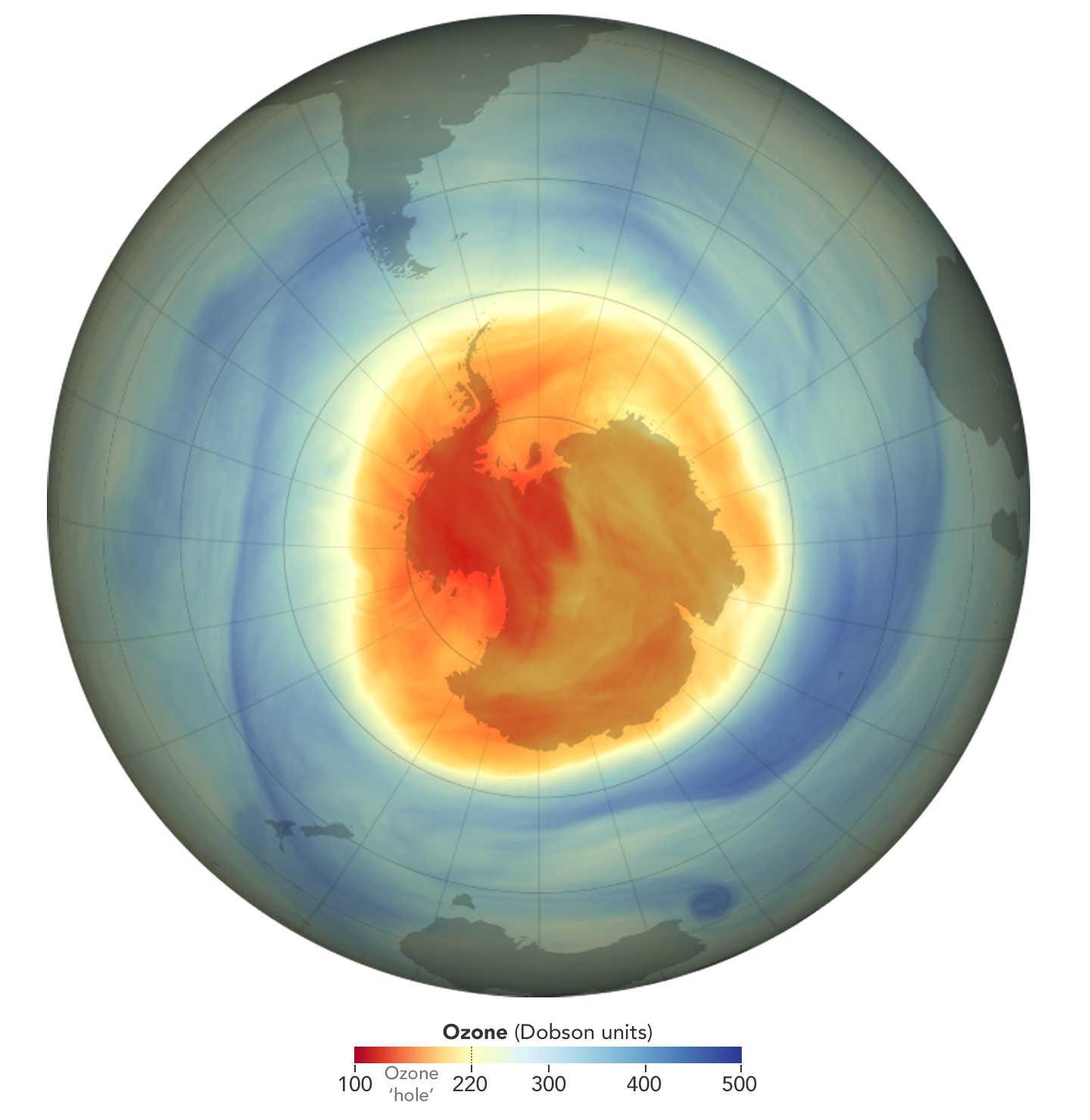
- 1.NASA Earth Observatory, Ozone Hole Reaches Its 2026 Maximum, dated Nov 09, 2026. "The ozone hole ranked seventh largest by area in 48 years of monitoring, but it was not as deep as other large holes on record." Scientists define the hole as ozone below 220 Dobson units. "As the images show, the word hole isn't literal; no place is empty of ozone." Mean size from September 7 to October 13. Map of September 18, "the day of its annual maximum area." "an unusually strong Antarctic polar vortex created ideal conditions for ozone depletion over a large area." 2026 data from OMPS on NOAA-20. "The global recognition of the destructive potential of CFCs led to the 1987 , a treaty phasing out the consumption and production of ozone-depleting chemicals." "about 80 percent of the chlorine in the stratosphere today comes from human, not natural, sources." "the Antarctic ozone layer will return to 1980 levels in the 2070s." Images by Lauren Dauphin, using data from NASA Ozone Watch. Retrieved 6:26 a.m. ET, Nov. 9. https://science.nasa.gov/earth/earth-observatory/ozone-hole-reaches-its-2026-maximum/
Legal instrument
Montreal Protocol (1987)
The 1987 Montreal Protocol is a treaty phasing out the consumption and production of chemicals that destroy ozone, in NASA Earth Observatory's account of the 2026 Antarctic ozone hole.
What is still unknown or disputed
- A single depth figure for 2026. The page says the hole was not as deep as other large holes and does not print this year's minimum in Dobson units in the passage this desk used.
- Whether the hole has closed since October 13. The page is about the seasonal maximum.
Primary sources
Every claim in this story is drawn from the documents below. If a fetch failed, that is recorded on the card.
Source 1
Ozone Hole Reaches Its 2026 Maximum
NASA Earth Observatory · November 9, 2026
The 2026 hole ranked seventh largest by area in 48 years of monitoring and was not as deep as other large holes. Mean size September 7 to October 13. Maximum area September 18. Recovery to 1980 levels expected in the 2070s.
https://science.nasa.gov/earth/earth-observatory/ozone-hole-reaches-its-2026-maximum/